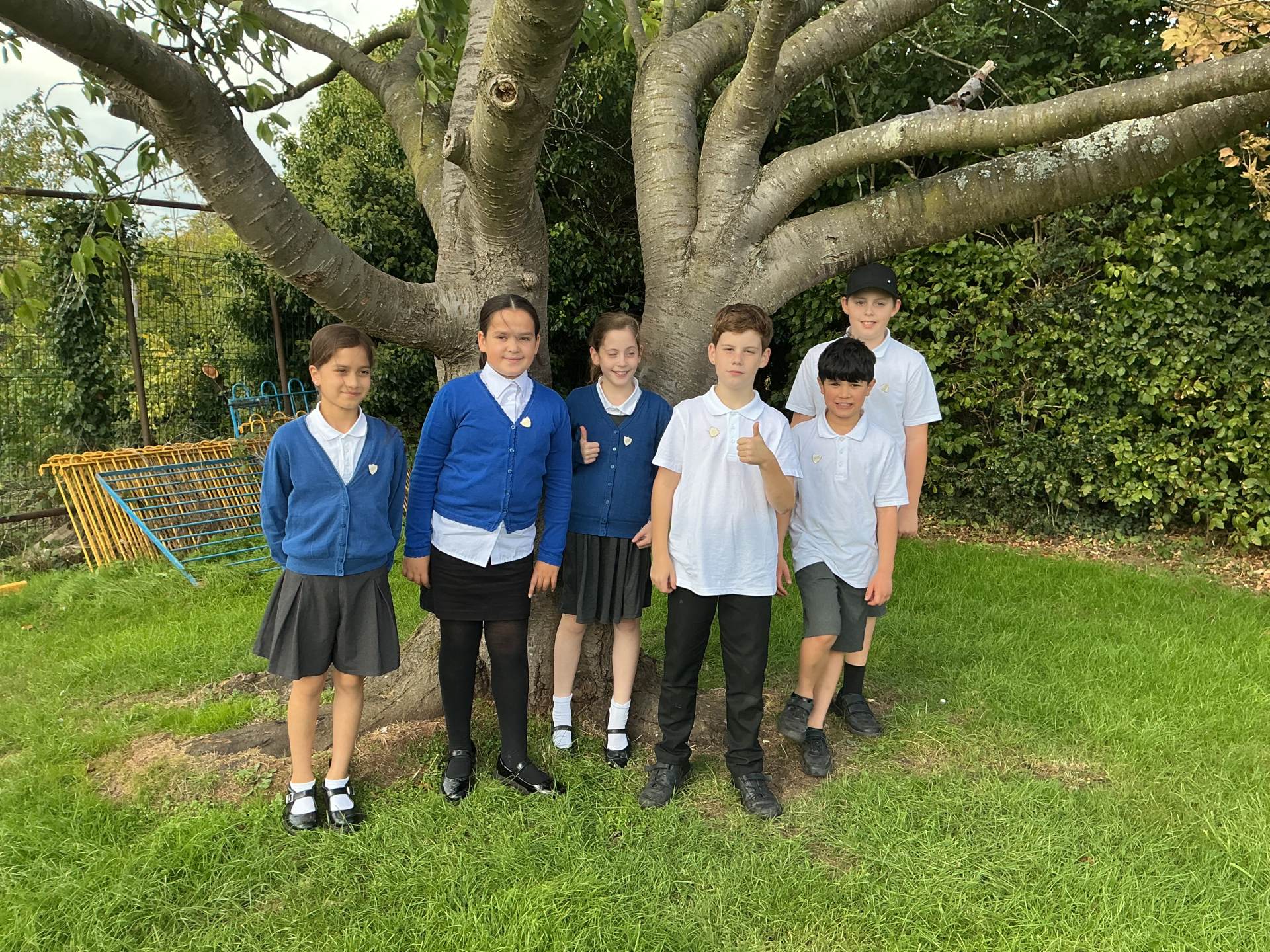
These are your Wellbeing Ambassadors. If you are feeling sad or a little bit down, you can find one of them and they will talk to you and try to make you feel better.
Mental wellbeing is about feeling good. Feeling that life is going well and feeling able to get on with everyday things. To be able to deal with life’s ups and downs; to be able to learn; enjoy friendships; to meet challenges; to develop talents and capabilities. Your Wellbeing Ambassadors are there to help you achieve this.
Our Wellbeing Ambassadors play an important role in promoting positive mental health and wellbeing across our school. They attend specialist training to develop the knowledge, skills and confidence needed to support their peers and contribute to whole-school wellbeing initiatives.
As part of their role, the ambassadors support the development of our SMILERS values and have created an action plan to help embed and promote these throughout the school community. They have developed a strong understanding of mental health and actively work to challenge stigma, encouraging open and supportive conversations about wellbeing.
In the past year, our Wellbeing Ambassadors (previously known as Anti-Stigma Ambassadors) were involved in creating a Pupil Mental Health and Wellbeing Policy. Working alongside Mrs Giles, our Inclusion Lead, they explored key questions about what helps children to feel safe, supported and happy in school. Using their ideas, experiences and advice, they helped to write a pupil-friendly policy designed to benefit all children and ensure that every pupil's voice is heard.
We are incredibly proud of the commitment, leadership and enthusiasm shown by our Wellbeing Ambassadors as they help make our school a positive, inclusive and supportive place for everyone.
Mental Health and Wellbeing
1. What does it mean?
2. Who can we talk to?
3. How does our school teach us about mental health and
wellbeing?
4. How do we know when we are not OK?
5. What can we do to look after our own mental health?
6. How can we help our friends and other children in our school?
7. What can we do if we need further support